
Mary Eunice Lincoln


Born:
Died:
Family:
Early Life:
Religion:
Occupation:
Military Service:
Interests:
Accomplishments:
Robert Lincoln
08/01/1843 - 07/26/1926
Early Life
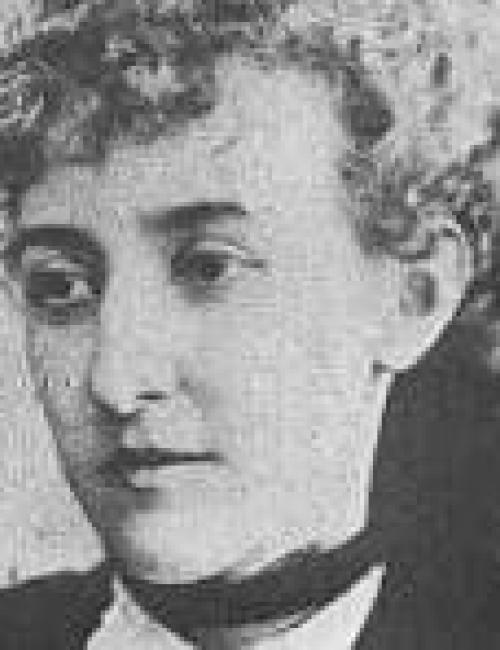
Mary Eunice Harlan was born on September 25, 1846, in Mount Pleasant, Iowa, the only surviving child of Senator James Harlan and Ann Eliza Peck Harlan. Her father, a rising figure in Iowa politics who would become a U.S. Senator and later Secretary of the Interior, and her mother, a devoted homemaker from a respected family, provided her with both a stable upbringing and a connection to the national political scene. Growing up in a household where intellectual conversation and civic responsibility were part of everyday life, Mary was shaped by her parents’ values of faith, education, and public service. Mount Pleasant, in mid-19th century Iowa, was a small but growing town, known for its cultural and educational institutions. It was home to Iowa Wesleyan College, one of the first coeducational colleges in the country, which fostered a progressive spirit in the community. Mary’s childhood was surrounded by both the intimacy of small-town life and the intellectual energy of an academic environment. Her father’s prominence meant that distinguished visitors and political colleagues often passed through their home, giving Mary an early glimpse into the world of politics and leadership. As a child, Mary received her earliest education at home, where her parents emphasized reading, moral instruction, and religious values. She was a bright and thoughtful girl, described by acquaintances as reserved but attentive, preferring the quiet study of books and music to the more public displays of her father’s career. When she was old enough, she continued her studies at local schools in Mount Pleasant and later took courses at Iowa Wesleyan College. While she did not complete a degree, her time at the college broadened her knowledge of literature, philosophy, and the arts. Her education, though not formalized in the way of a diploma, prepared her well for the social and intellectual life she would later lead as the wife of Robert Todd Lincoln. Mary’s upbringing was marked not only by education but also by religious influence. Her family were devout Methodists, and church attendance and moral duty were central to her early years. This religious grounding gave Mary a strong sense of discipline and modesty, traits that remained with her throughout her life. Even as her father moved between Iowa and Washington, D.C., during his Senate career, Mary remained closely tied to her home community, developing deep roots in Mount Pleasant that she would carry with her until her death nearly a century later. During her teenage years, Mary began to emerge from her quiet childhood into a young woman of refinement and grace. She inherited her mother’s gentle demeanor and her father’s thoughtful seriousness. Friends and relatives described her as dignified, with a strong sense of propriety, though never ostentatious. She was fond of music and literature, interests that gave her both personal enjoyment and social poise. Despite her father’s prominence, she avoided the limelight, preferring to remain in the background during public events. This inclination toward privacy would later define her role in one of America’s most famous families. By the time Mary reached her late teens, the Civil War had broken out, and her father’s role as a senator placed the Harlan family in the thick of the Union cause. Mary witnessed the national struggle from a unique perspective, balancing her small-town Iowa life with the gravity of her father’s duties in Washington. This period introduced her to the broader political and social currents that would shape her adulthood. It was also during this era that she first encountered Robert Todd Lincoln, the eldest son of President Abraham Lincoln, through her father’s connections in Washington. Thus, Mary Eunice Harlan’s early life was one of contrasts—between the quiet rhythms of Mount Pleasant and the urgent debates of the nation’s capital, between her personal preference for privacy and her family’s public prominence. She grew up nurtured by education, religion, and civic duty, values that prepared her for her eventual role as the wife of Robert Todd Lincoln and the custodian of the Lincoln family legacy. Though she lived much of her life away from the public eye, her formative years gave her the quiet strength and steady dignity that would define her character for the rest of her long life.
Married Life
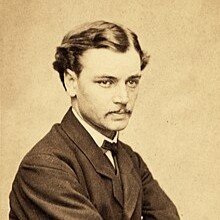
Mary Eunice Harlan married Robert Todd Lincoln, eldest son of President Abraham Lincoln, on September 24, 1868, in a quiet ceremony at her family’s home in Mount Pleasant, Iowa. Their union brought together two families of prominence—her father, Senator James Harlan, and Robert’s storied Lincoln heritage. After their marriage, the couple settled into a life that combined public duty with private retreat. Robert pursued a distinguished career as a lawyer, U.S. Secretary of War, and later ambassador to Great Britain, while Mary devoted herself to their home and children. Together they raised three children: Mary “Mamie” Lincoln, Abraham Lincoln II (“Jack”), and Jessie Harlan Lincoln. Mary’s role as a wife was marked by loyalty and discretion. She supported Robert through the demands of political life and later his presidency of the Pullman Company, but she shunned the spotlight, preferring to maintain the family’s privacy. The Lincolns lived in Washington, D.C., and later in Chicago, eventually making their summer estate in Manchester, Vermont, known as Hildene, a family retreat. Though her married life included sorrow, most painfully the death of her only son, Jack, Mary remained a steady presence. Her partnership with Robert spanned nearly four decades, defined by devotion, family, and quiet dignity.
Life as a Socialite
Although Mary Eunice Harlan Lincoln was naturally reserved, her position as the wife of Robert Todd Lincoln placed her within the social circles of Washington, Chicago, and London. As the daughter-in-law of Abraham Lincoln and wife of a statesman, she was often invited to political gatherings, diplomatic events, and social functions. During Robert’s tenure as Secretary of War and later as U.S. Minister to the Court of St. James’s, Mary fulfilled her duties as a hostess and companion with quiet grace. In London, she mingled among European society, attending receptions and formal dinners, where her composure and refined manner reflected favorably on her husband’s role as ambassador. In Chicago, as Robert rose to prominence in law and business, Mary’s role extended into civic and cultural life, though she always balanced social expectations with her preference for privacy. She hosted gatherings at their residences and supported causes consistent with her Methodist upbringing, favoring charitable works and education. Unlike many women of her era who embraced society for its glamour, Mary approached her role as a socialite with dignity and restraint. She viewed public appearances not as personal indulgence but as a responsibility tied to her husband’s career, fulfilling them with loyalty and quiet elegance.
Obituary
Level 3c Mary Eunice Harlan Lincoln, widow of Robert Todd Lincoln and daughter-in-law of President Abraham Lincoln, passed away on March 31, 1937, in Mount Pleasant, Iowa, at the age of ninety. A woman of quiet grace and steadfast devotion to her family, she safeguarded the Lincoln legacy with dignity while leading a private life away from the public eye. She is remembered as a loving mother and grandmother whose long life spanned nearly a century of the nation’s history.